* Please note that text in blue had been added/revised after the Quarter 1 Grade 11 journal submission
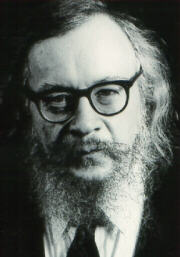
Who is Jerzy Grotowski? What is his theory?
Who is Jerzy Grotowski? What is his theory?
Learning about Grotowski and physical theatre has impacted my view of theatre as a whole. As a performer, it makes me more conscious of my physical movements and their purpose. It also makes me more aware of the meaning behind the blocking I am given, because physicality is so important, even outside of pure Grotowski work. I can use Grotowski's ideas about physicality to enhance my work in and outside of class. I know that the body and movement are important tools in acting, and studying physical theatre can help me use my body to become a character, or to portray emotion.
Also, the role of the actor in Grotowski has impacted my understanding of acting, and its purpose. In his theory, the actor is meant to have a spiritual revelation through their work, which is completely different from what I have studied before, where the main goal of the actor is to tell the story truthfully. I saw this idea embodied in Makbet, and in the Dzieci workshop, where the actors had a true spiritual gain from their experience. However, I still question the relevance this has to me in what I do as an actor, like in our production of Oliver! Maybe spirituality is an important component of Grotowski style theatre, but in realist theatre, like Oliver!, I do not think it needs to be applied or even adapted. While I did not find spirituality to be of great relevance to Oliver, I am seeing a lot of connections between Grotowski's support of the actor having a spiritual gain from his work and a the history and purpose of Bunraku, which is largely a vehicle for Zen Buddhism. In both cases spirituality and theatre are very closely linked, and theatre is used to come to some sort of spiritual realization. Knowing about Grotowski is helping to enhance my understanding of the role of spirituality in Bunraku.
For my own reference, I've come up with this basic guide to Grotowski:
A Beginner's Guide to Grotowski
*Organic Expression
"Grotowski's work, in contrast, seeks organic expression, obtained through rigorous work on the self in the service of an ultimately spontaneous energy flow in the performer's body manifested in a physical gesture without clear social or theatrical precedent."
*Poor Theatre
-Eliminates all nonessentials
Includes: sound effects, makeup, lighting, costumes, set, etc...
-Minimal use of props
-Actor becomes the central focus
This is very different from the conventions of musical theatre, which favor showy lights, sets, and costumes, and is largely based around what Grotowski calls "nonessentials". From what I can tell, "Poor Theatre" and "Musical Theatre" are polar opposites! However, I suppose they both use physicality, only in different ways. Musical theatre often has complex choreography and tricky dance moves, whereas Physical Theatre incorporates physical movement into all aspects.
*The Purpose
A) Stimulate a proccess of self-revelation
B) Articulation of this proccess
C) Eliminate obstacles caused by oneself
*Emphasis on Physical Movements
*Role of the Actor
engages himself and the audience in a spiritual revelation
reacts with complete impulse.
uses his or her body to create all that is needed in the play
works from within himself
*Influenced by Stanislavski
*Theatre is separate from cinema and television.
Photo Credit-http://owendaly.com/jeff/images/Grotows2.JPG
http://owendaly.com/jeff/grotowsh.htm
http://owendaly.com/jeff/grotowsh.htm
JERZY GROTOWSKI Methodical Exploration (1967) * Twentieth-Century Theatre: A Sourcebook Book by Richard Drain; Routledge, 1995 pp.277-

No comments:
Post a Comment
Note: Only a member of this blog may post a comment.